
Short answer: Nobody can promise that straightening teeth will stop grinding. Sleep bruxism is a centrally regulated jaw-muscle activity and current evidence does not support a misaligned bite as a general cause.
In children, grinding can occur alongside sleep-disordered breathing, especially when snoring, mouth breathing, or restless sleep are present. Finding out what else may be contributing, and what actually needs treatment, is the point of the exam.
What this page covers
- Why a child who grinds warrants a closer look than an adult who grinds
- The breathing connection, and what the evidence actually says
- What we screen for, and how
- What grinding costs you if you leave it alone
- Straight answers on braces, aligners, night guards, and retainers
Children and adults, side by side
If your child grinds their teeth, start here
Most childhood grinding fades on its own. The reason to pay attention anyway is that sleep bruxism in children shows a consistent association with sleep-disordered breathing. A 2024 systematic review of 29 studies found most reported the two occurring together. The association is real.
The direction is not settled, and the evidence quality is still low, so grinding on its own does not diagnose a breathing disorder.
So the useful question is not how to stop the grinding. It is whether anything else is happening at night.
Watch for grinding plus any of these: snoring, mouth breathing, restless or thrashing sleep, waking up tired, morning headaches, or trouble focusing at school.
That cluster is worth an evaluation, and it connects to airway orthodontics and to assessing chronic mouth breathing.
Does your child’s grinding come with anything else?
Why timing matters
A narrow upper jaw can usually be widened more straightforwardly while a child is still growing. Expansion has a real evidence base for improving nasal airway space in growing children, which is why it is part of Phase 1 treatment when it is indicated.
Growth is not a hard deadline, and options do exist later, but they get more involved. In our practice, expansion is a treatment for children and teens.
We will not tell you an expander stops grinding, because studies looking specifically at grinding events before and after expansion have not shown a significant reduction. Better breathing and less grinding are two separate claims and we keep them separate. But if your child does have an airway problem, addressing it at eight is a simpler proposition than addressing it at twenty-eight.
How we screen, specifically
If you are the one grinding
Adults grind too, and the honest picture is thinner. For most adult grinders, orthodontics is not the answer, and the useful outcome of an exam is knowing that for certain instead of guessing.
What nobody can promise you: that orthodontic treatment will stop it. Factors associated with bruxism include sleep arousal, genetics, stress and anxiety, sleep-disordered breathing, certain medications, caffeine, alcohol, and tobacco. A 2020 systematic review found no association between bruxism and most of the malocclusions it evaluated, though it did identify an association with crowding and rated the overall certainty of evidence very low.
A birth cohort study following adults to age 31 found occlusal features had no direct effect on grinding. Any practice telling you braces will switch it off is ahead of the evidence.
What is honestly on the table: grinding does not have one cause, and yours is specific to you. When a separate airway or orthodontic problem is present, treating it is usually worthwhile on its own merits, and for some people the grinding improves too. That is a possibility, not something anyone should promise you as the outcome.
And what we will tell you plainly: if your grinding is not something orthodontics reaches, we will say so and point you in a better direction. You will not sit through a pitch for braces you do not need.
Where orthodontics does matter for an adult grinder is narrower but real. Years of grinding flattens cusps and shortens teeth unevenly, and that existing wear changes what an ideal finish looks like if you pursue braces or aligners for any reason. Someone also needs to be watching whether your bite is drifting, and orthodontists are the ones trained to catch it.
What grinding costs if you ignore it
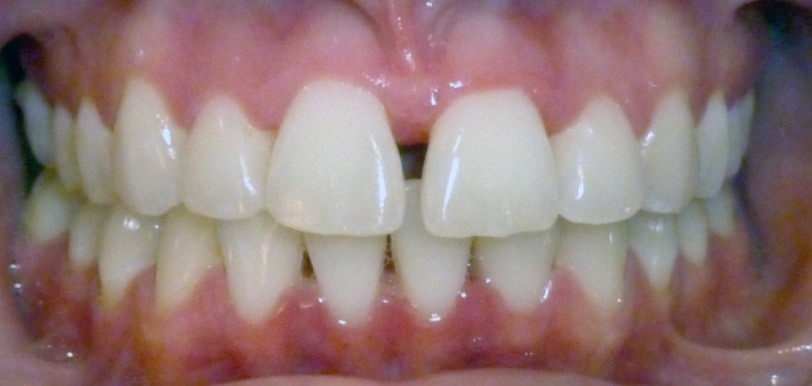
Your teeth. Enamel does not grow back. As wear progresses and dentin becomes exposed, teeth get more sensitive and harder to restore conservatively. Severe wear and fractures can eventually mean bonding or crowns.
One caveat that cuts our way: visible wear alone does not confirm active grinding, because erosion and ordinary use contribute too. That is a reason to have it looked at rather than diagnosed in a mirror.
Your comfort. Some people who grind report morning jaw-muscle soreness, fatigue, or headaches.
A separate signal worth catching. If poor sleep, daytime fatigue, or attention problems are also in the picture, especially in a child, that raises its own questions about sleep quality and breathing.
Your wallet, later. Restorative work is measured in crowns and thousands of dollars. An exam is measured in an hour.
What happens at your visit
Free, about 60 minutes. X-rays and photos, and Dr. Murray personally examines wear patterns, muscle tenderness, jaw joint function, and tooth position.
The exam answers three questions: how much damage has already happened, whether tooth position or bite function independently warrants treatment, and whether something treatable is driving the grinding.
Three ways this goes
No pressure. An hour of your time and a clear answer, whether or not it involves us.
An hour tells you what months of guessing will not
Frequently asked questions
Why is my child grinding their teeth at night?
Most childhood grinding resolves on its own. When it appears alongside snoring, mouth breathing, restless sleep, or daytime fatigue, it may signal sleep-disordered breathing and deserves evaluation. A 2024 review of 29 studies found the two frequently occur together.
Can an orthodontist help with teeth grinding?
Yes. An orthodontist can document tooth wear, evaluate whether grinding has affected your bite or would affect a treatment plan, design retention for patients who grind, and screen children for signs warranting airway or sleep evaluation. Orthodontic treatment itself is not considered a cure for sleep bruxism.
Will braces stop me from grinding my teeth?
Not as a rule. Research has not established misaligned teeth as a general cause of sleep bruxism. If your grinding traces to something orthodontics reaches, treatment may help. If it does not, straightening will not change it, which is why the exam comes first.
Does Invisalign help with teeth grinding?
Aligners sit between the teeth during wear, which incidentally limits direct contact. That is a side effect, not a treatment. They are thin, replaced every week or two, and not built to absorb grinding force, so they should never be started for that purpose.
Can I use my retainer as a night guard?
No. Retainers are thin and built to hold tooth position, not absorb force. Heavy grinding can wear, crack, or distort a clear retainer, and once it fails it stops holding your teeth too. You end up paying for both.
Can a night guard keep my teeth from shifting?
Not reliably, and it can do the opposite. Guards are designed to absorb force, not control position. Orthodontic literature documents unwanted bite changes, including open bite, in long-term guard wearers. If you need position held, you need a retainer.
Does a night guard stop grinding?
No. A 2021 systematic review found insufficient evidence that occlusal splints outperform no treatment for bruxism itself, and a 2024 meta-analysis found soft and hard appliances did not significantly change jaw-muscle activity or bite force. A guard protects teeth. It does not switch off the grinding, which is why it is worth knowing what is causing yours.
At what age should a child who grinds be evaluated?
The American Association of Orthodontists recommends a checkup by age seven for every child. That is general guidance, not a bruxism rule. If grinding comes with frequent snoring, mouth breathing, or pauses and gasping during sleep, raise those symptoms with your child’s healthcare providers rather than waiting on a birthday.
What Palm Beach Gardens families say
Sources
The clinical claims on this page link to the primary research behind them.
- Ribeiro-Lages MB, et al. Is there association between dental malocclusion and bruxism? A systematic review and meta-analysis. Journal of Oral Rehabilitation, 2020.
- Role of occlusal factors on probable bruxism and orofacial pain: data from the 1982 Pelotas birth cohort study. Journal of Dentistry, 2021.
- Hardy RS, Bonsor SJ. The efficacy of occlusal splints in the treatment of bruxism: a systematic review. Journal of Dentistry, 2021.
- Ferreira GF, et al. Influence of occlusal appliances on the masticatory muscle function in individuals with sleep bruxism: a systematic review and meta-analysis. European Journal of Oral Sciences, 2024.
- Orradre-Burusco I, et al. Sleep bruxism and sleep respiratory disorders in children and adolescents: a systematic review. Oral Diseases, 2024.
- Effects of rapid maxillary expansion on respiratory and bruxism indexes in children with obstructive sleep apnea: a pilot study. Cranio.
- Bereznicki T, Barry E, Wilson NHF. Unintended changes to the occlusion following the provision of night guards. British Dental Journal, 2018.
Visit Us in Palm Beach Gardens
We have been treating Palm Beach County families since 1991, and Dr. Murray has led the practice since 2021. He is a Board-Certified Orthodontist, which means he voluntarily sat for peer-developed written and clinical examinations and renews that certification every ten years. He is also a three-time winner of Best Orthodontist in Palm Beach County, taking the award in 2023, 2024, and 2026.
Murray Orthodontics, Palm Beach Gardens
Monday through Thursday, 8:30 AM to 5:00 PM
We see patients from Jupiter, North Palm Beach, Juno Beach, and Lake Park at this location, and we have a second office in Royal Palm Beach for families closer to Wellington, Westlake, and Loxahatchee.
If your child grinds their teeth at night, an hour now tells you whether it is a phase or a signal. Schedule a free consultation or call 561-775-7999, and meet Dr. Murray first if you like.