Medically reviewed by Jonathan Murray, DMD, MS, ABO Board-Certified Orthodontist. Last reviewed July, 2026.
Most parents land here for one of two reasons. Either someone said your teenager needs braces and you want to know what you are walking into, or your teen finally said something about their teeth.
Underneath, the questions are usually the same three. What will this cost, will my kid cooperate, and is this going to wreck their high school years.
Murray Orthodontics treats teens at our Palm Beach Gardens office on Burns Road, and families come to us from Jupiter, North Palm Beach, Juno Beach, Lake Park, and Royal Palm Beach. Teen braces here run $3,000 to $7,500 depending on the type and the complexity of the bite, and most teens finish in 12 to 24 months.
Below is what drives that cost, how to time treatment around senior photos and college, what braces do to school and sports and band, and what happens at the free consultation.
How much do braces cost for teens in Palm Beach Gardens?
The range is wide because the work is not the same from one teen to the next. Rotation and crowding on the front teeth is a different amount of work than a bite that has to be corrected front to back, and treatment length moves the number too.
What you will not get here is a figure that changes after you have committed. At the free consultation, Dr. Murray examines your teen’s teeth and bite, tells you what he recommends, and you get the full financial picture in the same visit. We work with many Florida insurance plans and verify your orthodontic benefits before you arrive. Payment plans are in-office and carry no interest, and there is a discount for paying in full.
If cost is the thing holding you back, start with the options for paying for braces in Palm Beach County or the longer braces cost breakdown for Palm Beach Gardens.
How long do braces take for teens, and can we finish before senior photos?
Most teens are in braces 12 to 24 months. Senior portraits in Palm Beach County are usually shot the summer before senior year, so the timing works backward from there.
- Start freshman year: braces are typically off well before junior year, with room to spare for senior photos, prom, and graduation.
- Start sophomore year: most cases finish before senior portraits.
- Start fall of junior year: many cases still finish in time, but the plan needs to be specific. Ask at the consultation and Dr. Murray will tell you honestly whether the timeline works.
- Start senior year: treatment will likely run into the first year of college. That is workable and we plan for it, but you should know going in.
Age matters too. Most teens here start between 11 and 16, when the permanent teeth are in but the jaw is still developing. If your teen is already 17 or 18, treatment still works. It just changes the conversation, and it is worth getting a second opinion if you have been told something you are unsure about.
What if my teenager does not want braces?
Plenty of teens are not on board at first. Some have decided braces will make them look like a kid. Some had a friend with a bad experience. A few just do not want one more thing to be responsible for.
What usually changes their mind is being talked to instead of talked about. At the consultation, Dr. Murray explains the plan to your teen directly, not to the parent while the teen scrolls their phone in the corner. Teens tend to buy in when they understand what is happening in their own mouth and when they get a say in how it looks.
If your teen is anxious rather than resistant, that is a different problem with a different fix: what to do when your child is anxious about braces.
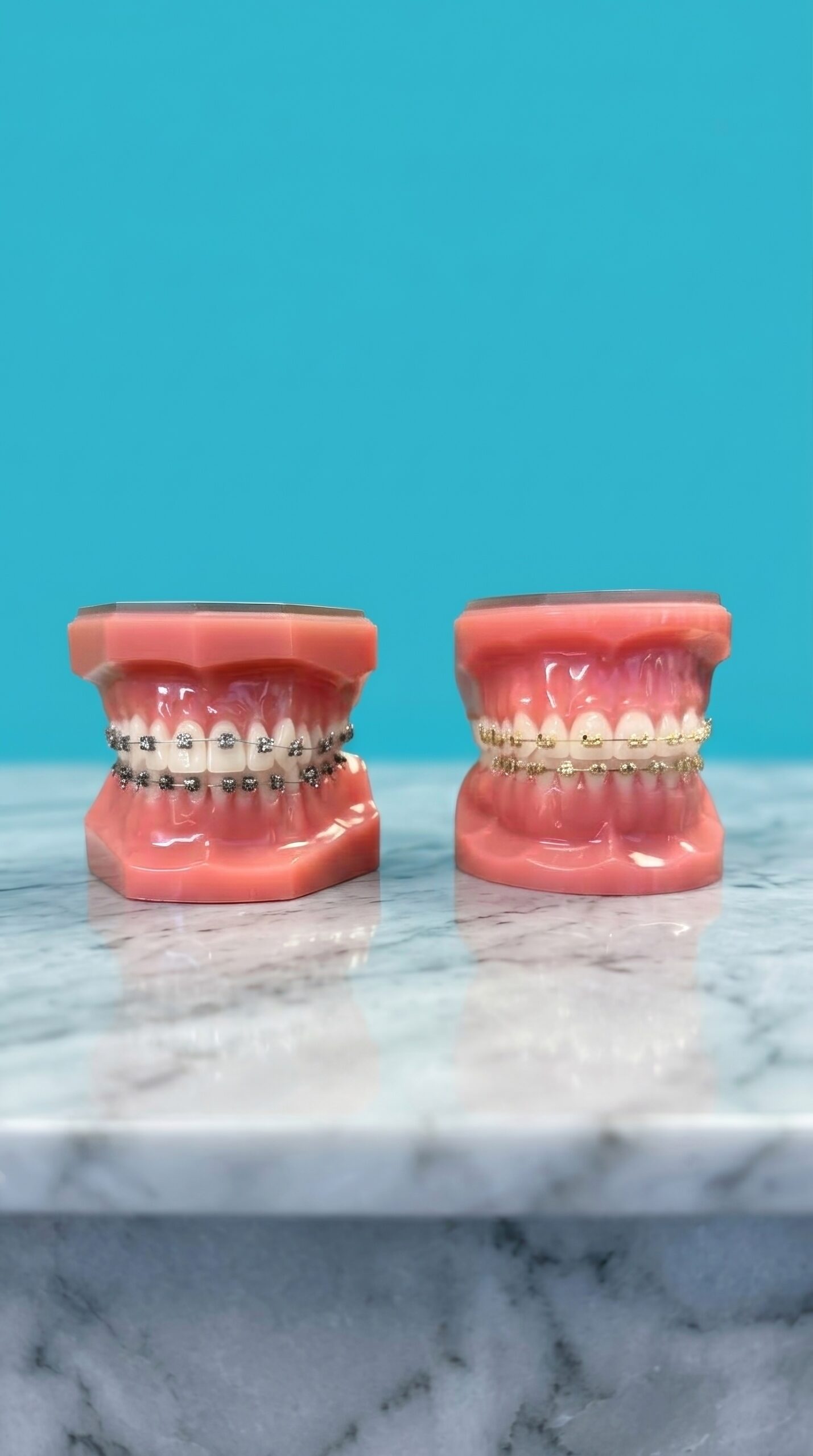
Teen braces options at Murray Orthodontics
Giving your teen a real choice is often what turns a no into a yes.
- Metal braces are the workhorse, and today's brackets are noticeably smaller than the ones you probably had. Colored elastic ties change every visit, which some teens get into and some skip in favor of clear or gray.
- Clear ceramic braces use Radiance brackets by American Orthodontics, which blend into the tooth. The brackets themselves do not stain. Only the elastic ties can pick up color, and those are replaced at every adjustment.
- Iconix champagne braces are a warm gold tone instead of silver. Teens who want something that reads as a choice rather than a medical device often land here.
- Invisalign Teen is the removable route, and for the right case and the right kid it works well. It also depends entirely on your teen wearing the aligners, which is worth an honest conversation before you start.
Not every bite is a candidate for every option. Dr. Murray will tell you which of these will get your teen the result they want, and which is just the one they like the look of.
How braces affect school, sports, food, and band
Appointments. Adjustments are every six to eight weeks and they are short. Early morning slots usually mean missing one class period instead of half a day. We run on time, which sounds minor until you have sat in a waiting room for forty minutes with a kid who has a test third period.
The first few days. Teeth are sore for two or three days after braces go on, and for about a day after each adjustment. Soft food and whatever your teen normally takes for a headache handles it.
Food. The avoid list is shorter than parents expect but it is real: ice, hard candy, popcorn kernels, whole apples and carrots unless cut, anything sticky enough to pull a bracket. Cutting food smaller solves most of it. Our braces-friendly food swaps cover the rest.
Sports. Your teen can play everything they played before. They need an orthodontic mouthguard specifically, not the standard boil-and-bite kind, because a standard guard is molded for teeth without brackets and will not fit correctly over braces. Ask us at the bonding appointment.
Band. Brass and woodwind players keep playing. There is an adjustment period of a couple of weeks, and wax over the brackets helps during it. Trumpet and French horn players notice it most. If your teen is in a competitive marching program, tell us at the consultation so we can time the bonding appointment around their season instead of the middle of it.
Driving themselves. Once a teen is driving, plenty come to appointments alone. We will still call or text you with anything you need to know.
What actually decides how long your teen is in braces
Treatment length is estimated at the start and then earned.
Elastics. If the plan includes rubber bands, wearing them as directed is the single biggest variable in the timeline. Consistent wear finishes close to the estimate. Wearing them only in the week before an appointment can add months. Have that conversation with your kid up front, not at month fourteen.
Broken brackets. Every broken bracket is an unplanned visit and a pause in progress. One or two across treatment is normal. A pattern of them usually traces back to the food list, and it adds up.
Hygiene, and the thing nobody warns teens about
Brushing with braces takes longer. Teens who rush it can develop white marks on the enamel around where the brackets were, and those show up after the braces come off.
This is preventable. It means brushing after meals, getting a floss threader or water flosser into the routine, and keeping regular cleanings on the calendar during treatment. Our hygiene team checks at every visit and will tell your teen directly, and kindly, when something needs to improve. The full routine is in how to maintain oral hygiene with braces.
Braces are not only about crooked teeth
Many teen cases that look cosmetic are bite problems underneath. Teeth that meet incorrectly can wear unevenly over time.
Dr. Murray evaluates how the upper and lower teeth fit together, not just how the front six look in a photo. If the exam points to a crossbite, an overjet, or general crowding and crooked teeth, you will hear about it plainly.
He also checks for airway signs. If your teen snores, sleeps with their mouth open, or is chronically exhausted despite sleeping enough, mention it. More on our airway orthodontics page.
After the braces come off, and what happens if college comes first
Your teen gets their retainer the same day the braces come off and starts wearing it that night. At Murray Orthodontics, retainers are nights only from the start. No full-time phase, no weaning schedule. Nights, from day one, and then nights indefinitely, because teeth shift for life.
The teens who lose their results are almost always the ones who stopped wearing the retainer in the first year or two out. Build it into the bedtime routine while your teen is still at home and it tends to stick. Contact-sport athletes still want their orthodontic mouthguard.
If treatment is not finished before your teen leaves for school, they do not get handed off to someone else. We treat a lot of students who go to college out of state, and we keep treating them. We work around the academic calendar and see them when they are home, over winter break, spring break, and summer.
That means your teen finishes with the orthodontist who started them, and you are not explaining their case to a stranger halfway through. Tell us the college plan early so we can build the timeline and the appointment schedule around it from the beginning.
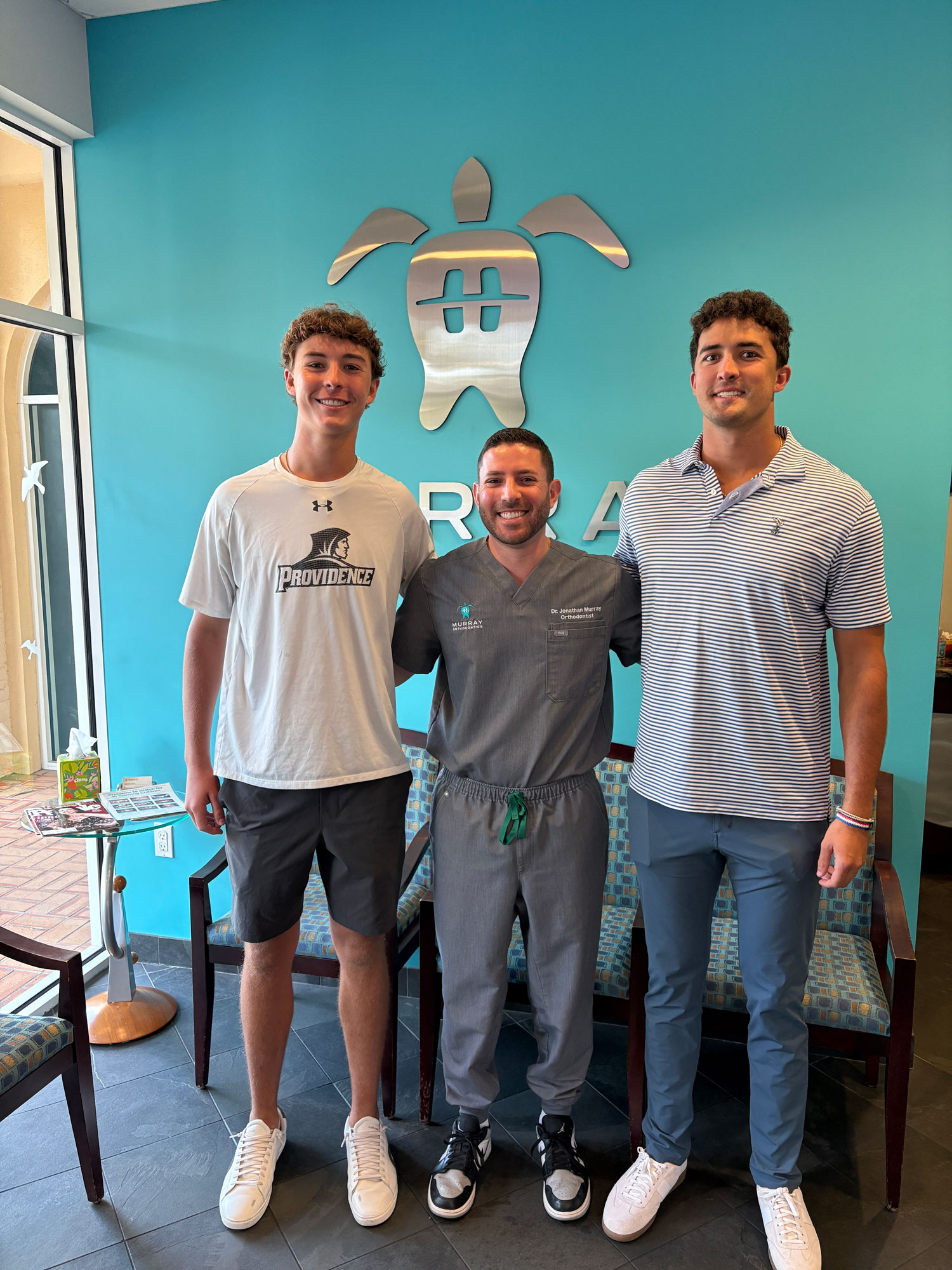
What happens at your teen's first visit
The consultation is free, takes about an hour, and carries no obligation.
- Your teen is greeted by name at the front desk.
- We take the x-rays and photos needed to evaluate their teeth and bite.
- Dr. Murray personally examines them. Not an assistant, not a treatment coordinator.
- He explains what he found, what he recommends, and roughly how long it will take, in language your teen understands.
- You get the complete financial breakdown before you leave. Insurance benefits, payment options, total cost.
- If you are ready, treatment can start the same day.
A same-day bonding appointment runs 60 to 90 minutes. The full first visit walkthrough has more if your teen wants to know exactly what to expect.
Why Palm Beach Gardens families choose Murray Orthodontics
Dr. Jonathan Murray is certified by the American Board of Orthodontics, the only orthodontic specialty board recognized by the American Dental Association. Certification is voluntary, requires passing written and clinical examinations judged by other orthodontists, and has to be renewed every ten years.
He earned his orthodontic certificate and master's degree through a three-year residency at the University of Florida, after graduating at the top of his dental class at Nova Southeastern. He has been named Best Orthodontist in Palm Beach County three times by the Palm Beach County Community Choice Awards, in 2023, 2024, and 2026.
Day to day, parents tell us what matters more is smaller than any of that. This is a boutique practice, not a chain. Your teen sees Dr. Murray at every visit, not a rotating roster. Several team members have been here fifteen to twenty-eight years. The practice has served Palm Beach County families since 1991.
Read what other families have said, or look at before and after results from teens who finished treatment here.
Frequently Asked Questions
What is the best age for a teen to get braces?
Most teens start between ages 11 and 16, when the permanent teeth are in but the jaw is still developing. There is no hard cutoff, and older teens are treated successfully all the time.
How much do braces cost for teens in Palm Beach Gardens?
Metal braces run $3,000 to $7,000. Clear ceramic braces, Iconix champagne braces, and Invisalign Teen run $3,500 to $7,500. You get your exact number in writing at the free consultation, along with insurance benefits and no-interest payment options.
Do braces hurt?
Getting them on does not hurt. Teeth are sore for a couple of days afterward and for about a day after each adjustment. Soft foods and an over-the-counter pain reliever handle it for nearly everyone.
Can my teen play sports with braces?
Yes, in every sport. They need an orthodontic mouthguard rather than a standard store-bought one, because standard guards are molded for teeth without brackets. We will make sure they have the right one.
Can my teen still play a wind instrument with braces?
Yes. Brass and woodwind players usually need a couple of weeks to adjust, and dental wax over the brackets helps. Tell us about marching season at the consultation and we will time the bonding appointment around it.
Will my teen miss a lot of school?
Not much. Adjustments are every six to eight weeks and are short visits. Early morning appointments usually mean missing one class period.
What happens if my teen breaks a bracket?
Call the office and we will get them in to repair it. It is a quick fix. One or two across treatment is normal, but repeated breaks pause progress and extend the timeline.
Does insurance cover braces for teens?
Many plans include orthodontic benefits, often as a lifetime maximum rather than an annual one. We verify your benefits before the consultation so you know your actual out-of-pocket number that day.
What if my teen leaves for college before treatment is done?
We keep treating them. We see a lot of students who go to school out of state, and we schedule their appointments for when they are home on breaks. Your teen finishes with the orthodontist who started their treatment. Tell us the college plan early so we can build the schedule around it.
Schedule your teen's free consultation
No referral needed, no obligation, no cost.