Medically reviewed by Dr. Jonathan Murray, Board-Certified Orthodontist — Duke University, University of Florida
You bite down, but your front teeth don’t touch. Sound familiar?
Maybe you’ve been told you have an open bite. Or maybe you just know something’s off — your teeth won’t close all the way, you can’t bite into a sandwich properly, or you’ve been compensating so long you barely notice it anymore. Either way, you’re here because you want to know what it takes to fix your bite.
And if someone has mentioned jaw surgery, you’re probably wondering if that’s really your only option. (Spoiler: it usually isn’t.)
At Murray Orthodontics, we treat open bites regularly for kids, teens, and adults at our Palm Beach Gardens and Royal Palm Beach offices. Dr. Jonathan Murray is a Board-Certified Orthodontist with advanced training from the University of Florida and a conservative treatment philosophy — meaning he’ll always explore the least invasive option that gets the job done right.
What Is an Open Bite?
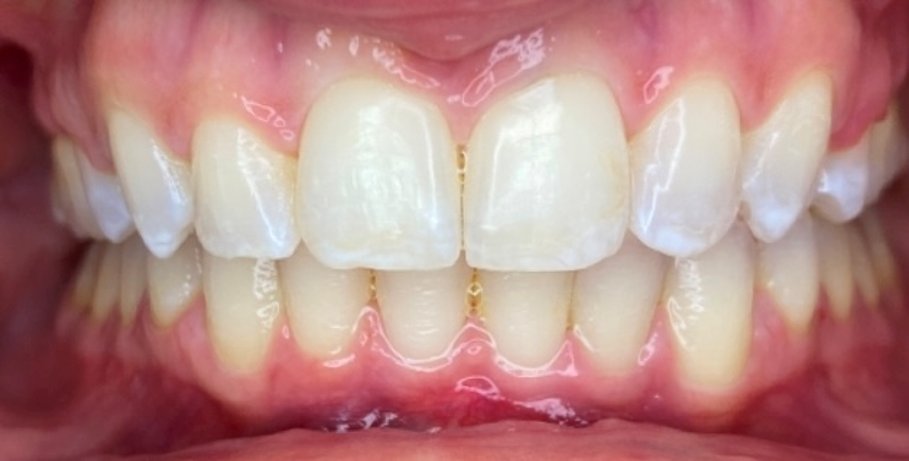
An open bite is exactly what it sounds like: when you close your mouth completely, some of your teeth don’t make contact. There’s a visible gap — even though your jaw is fully shut.
Most people notice it with their front teeth first. They bite down and there’s still space between the top and bottom. That gap might seem small, but it affects everything from chewing to speech to how your teeth wear over time.
This condition isn’t super common — only about 0.6% of adults in the U.S. have one. But for those who do, the daily frustrations are real. Biting into an apple, tearing open a package, even pronouncing certain sounds clearly — all of it gets harder when your front teeth can’t do their job.
Anterior Open Bite vs. Posterior Open Bite
There are two main types, and they show up in different places:
Anterior open bite is the more common one. Your back teeth come together fine, but there’s a gap between your upper and lower front teeth. This is the type that affects biting, speech, and the overall look of your smile. It’s also the type most people are Googling when they search “my teeth don’t close all the way.”
Posterior open bite is less common but just as disruptive. Your front teeth touch, but the back ones don’t meet. This makes chewing incredibly inefficient — you’re basically trying to grind food with teeth that aren’t connecting. It can also lead to TMJ issues and uneven wear on the teeth that are doing all the work.
Both types are treatable. The approach depends on how severe the bite is, what’s causing it, and whether we’re working with a growing child or an adult whose jaw has fully developed.
If the patient is a teenager, here is what braces treatment involves day to day, from appointments and food to sports, band, and finishing before senior year.
What Causes an Open Bite?
This is one of the first things Dr. Murray evaluates at your consultation, because the cause directly shapes the treatment plan.
In children, the most common culprits are habits:
Thumb sucking past age 3–4 puts steady pressure on the front teeth, pushing them outward. Pacifier use does the same thing. These are called “dental” open bites because the problem is with the teeth position, not the bone structure — and they’re often the easiest to correct, especially if caught early.
Tongue thrusting is another big one. It’s a swallowing pattern where the tongue pushes forward against the front teeth instead of pressing up against the roof of the mouth. A lot of kids (and adults) don’t even know they’re doing it. Left unchecked, it keeps the open bite going — or can cause one to come back after treatment.
In adults, open bites tend to have deeper roots:
Sometimes it’s skeletal — the jaws grew in a way that doesn’t allow the teeth to come together properly. Genetics play a role here. A family history of open bites, long facial structures, or excessive vertical jaw growth can all contribute.
Other times it’s a combination. Maybe there was a habit in childhood that was never fully addressed, or the teeth shifted over time as tongue posture stayed poor. TMJ disorders can also factor in — when your jaw joint is uncomfortable, you may unconsciously position your tongue between your teeth to find relief, which gradually pushes them apart.
The important thing: regardless of the cause, there’s almost always a treatment path that doesn’t involve surgery.
What Happens If You Don’t Treat an Open Bite?
We get this question a lot — especially from adults who’ve been living with this condition for years and have adapted to it. Here’s the straight answer: it almost always gets worse over time.
Your teeth wear unevenly. When your front teeth aren’t sharing the workload, your back teeth take all the force. That means faster wear, more risk of cracks, and potential dental problems down the road.
Chewing gets harder. You’re already compensating — maybe tilting your head, using your tongue to mash food against your palate, or just avoiding certain foods altogether. Over time, inefficient chewing can even affect digestion.
Speech can be affected. Sounds like “s,” “z,” and “th” require your tongue to interact with your teeth in specific ways. A gap between your front teeth changes that interaction, which is why some people develop a lisp or find certain words harder to pronounce clearly.
Your smile confidence takes a hit. A lot of people with open bites become self-conscious about how their mouth looks when closed — or they stop smiling with their teeth altogether. If you’ve been hiding your smile in photos or avoiding certain social situations, you’re not alone.
The gap can keep getting wider. Without treatment, habits like tongue thrusting continue pushing the teeth apart. The bone gradually remodels around the new tooth positions, making the space larger year after year.
Treatment gets more complex. The longer you wait, the more the bite changes. What might have been a straightforward case at 25 could require a more involved treatment plan at 40.
None of this is meant to scare you — it’s meant to help you make a confident, informed decision about timing. And if you’ve been putting it off, you’re not behind. You’re right on time.
How Open Bites Are Treated
Here’s where it gets interesting — and where having a Board-Certified Orthodontist matters more than you might think.
Open bites aren’t one-size-fits-all. The right approach depends on whether the problem is dental, skeletal, or a combination. It depends on your age. It depends on severity. And it depends on what caused it in the first place.
Dr. Murray evaluates all of this during your free consultation before recommending anything. Here’s a quick comparison, followed by a closer look at each option:
Open Bite Treatment Options at a Glance
Every approach Dr. Murray recommends starts with the least invasive option first.
| Treatment | Best For | Visibility | Timeline | Appointments |
|---|---|---|---|---|
| Metal Braces | Complex cases, severe open bites | Visible (clear bracket option available) | 12–24 mo | Every 6–8 wks |
| Clear Aligners★ Most Popular | Mild to moderate dental open bites | Nearly invisible | 12–20 mo | Every 8–12 wks |
| Surgical Orthodontics | Severe skeletal open bites | N/A (jaw repositioning) | 18–30 mo total | Varies by case |
| Early InterventionKids | Habit-related open bites in growing children | Depends on appliance | Varies | Monitoring at no cost |
Braces
Traditional metal braces in Palm Beach remain one of the most reliable tools for correcting open bites, particularly more complex cases. They give your orthodontist precise control over individual tooth movement — something that’s critical when you need to bring teeth together vertically while also managing the position of the back teeth.
For this type of bite correction, braces are often combined with elastics (rubber bands) that connect the upper and lower arches. These create the vertical force needed to close the gap. The key is wearing them consistently — they only work if they’re in your mouth.
In some cases, clear braces (ceramic brackets) can achieve the same results with a more discreet look. Same mechanics, just less visible. Not sure which option fits your situation? Our braces vs. Invisalign comparison can help you think it through.
Braces appointments are typically every 6–8 weeks for adjustments.
Clear Aligners
Here’s something a lot of people don’t realize in Palm Beach Gardens: clear aligners have become remarkably effective at correcting open bites — and the research backs it up.
A study published in Progress in Orthodontics found that clear aligners achieve significant molar intrusion (pushing back teeth down) and counterclockwise rotation of the jaw during open bite treatment. That “bite block effect” — where the thickness of the aligner material across the back teeth helps intrude molars when you bite down — is actually a built-in advantage for open bite cases.
Another study of 50 open bite patients treated with clear aligners showed a mean improvement from -3.5mm to +1.5mm overbite, with 90% of patients reporting high satisfaction with both aesthetics and comfort.
And the price of Invisalign is very similar to braces!
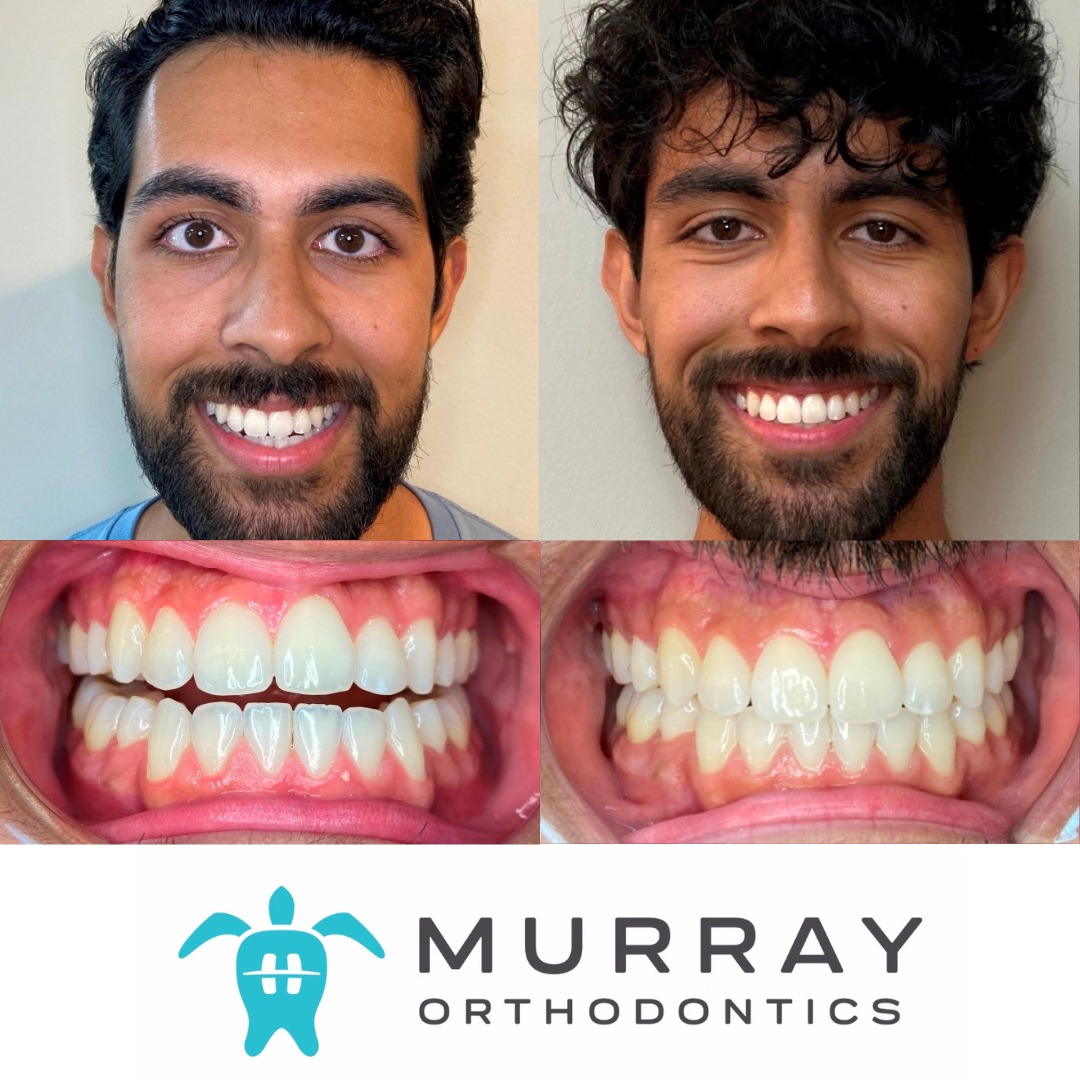
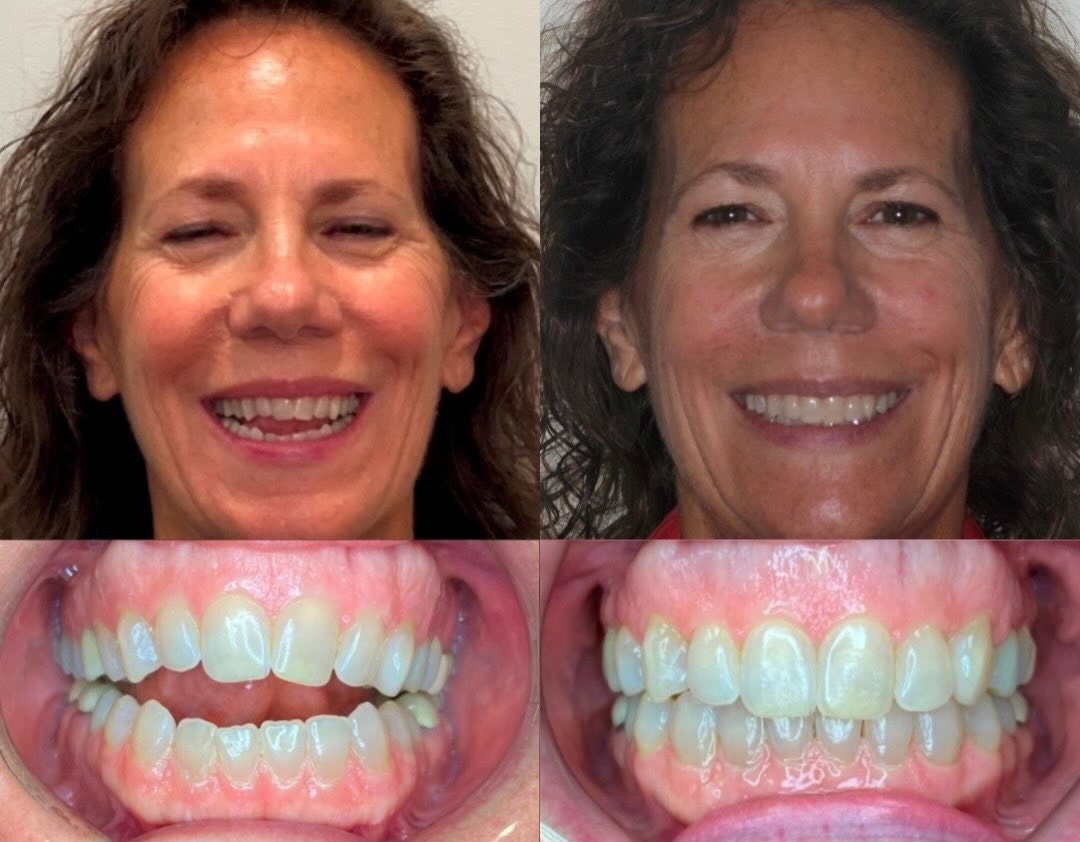
We recently finished a case right here at Murray Orthodontics where a patient came in unable to bite into food normally. She’d been told she might need jaw surgery or extractions to fix the bite. Instead, Dr. Murray treated her with clear aligners alone. Sixteen months later, her bite was fully corrected.
No surgery. No extractions. Just a great treatment plan and a patient who wore her aligners like a champ.
Want to see more real results? Check out our before and after gallery for cases just like this one.
That said, clear aligners aren’t the answer for every open bite. More severe skeletal cases may still need braces or a combined approach. That’s exactly why the consultation matters — he’ll be honest about what will work for your specific situation. Learn more about Invisalign in Palm Beach Gardens including cost, process, and what to expect.
Clear aligner check-ins are typically every 8–12 weeks.
Surgical Orthodontics
For severe skeletal open bites — where the jaw structure itself is the primary issue — surgical orthodontics may be the most effective path to a stable, long-term result.
This typically involves a LeFort I osteotomy, where the upper jaw is repositioned surgically and secured with plates and screws. It sounds significant because it is — but the results can be transformative for cases where orthodontics alone can’t fully close the bite.
Surgery is always paired with orthodontic treatment before and after the procedure. Dr. Murray works closely with oral surgeons to coordinate these cases from start to finish.
Here’s what matters: Dr. Murray will never recommend surgery if a less invasive approach can get the job done. His training at the University of Florida covered both surgical and non-surgical correction of complex bites, so he’s able to offer you the full picture — not just the approach he happens to prefer.
Early Intervention for Kids
The American Association of Orthodontists recommends that children see an orthodontist by age 7. For open bites specifically, early evaluation is critical because:
Habit correction is easier when bones are still growing. Breaking a thumb-sucking or tongue-thrusting habit at age 7 gives the jaw time to self-correct before adult teeth fully come in. Wait until age 14, and the window for that natural correction has largely closed.
Phase 1 appliances can guide growth. Depending on the situation, Dr. Murray may recommend an appliance to help redirect jaw growth or break a tongue-thrusting pattern while your child is still developing. This can prevent the need for more extensive treatment later.
Not every kid needs treatment right away. Sometimes the best plan is monitoring. His Growth & Development Program keeps an eye on your child’s bite at regular intervals — at no cost — so treatment starts at exactly the right time, not too early and not too late.
If your child’s dentist has flagged a bite issue, or you’ve noticed that their front teeth don’t touch when they bite down, a free consultation is the simplest way to find out what’s going on and whether anything needs to happen now.
The Role of Tongue Thrusting (and Why It Matters for Treatment Success)
This is something that comes up on every orthodontic forum, and it’s worth addressing directly: tongue thrust can cause an open bite, and if it isn’t addressed during treatment, it can cause the bite to reopen after correction.
Tongue thrusting is a swallowing pattern where the tongue pushes forward and presses against (or between) the front teeth instead of resting on the roof of the mouth. Many people do this without realizing it — you might swallow 500 to 1,000 times a day, and each time, that forward pressure is working against your teeth. Beyond the bite itself, chronic tongue thrusting and mouth breathing can also affect airway development — something Dr. Murray evaluates as part of the bigger picture. Learn more about airway orthodontics and how breathing and bite are connected.
He evaluates tongue posture and swallowing patterns as part of every open bite assessment. Depending on what he finds, treatment might include:
Awareness and retraining — Sometimes just knowing about the habit is enough to start correcting it, especially in older teens and adults.
Myofunctional therapy referral — This is essentially physical therapy for the muscles of the mouth and tongue. A trained therapist teaches proper tongue posture, swallowing patterns, and lip seal exercises. It’s painless, and it makes a real difference for long-term stability.
Tongue spurs or habit appliances — For younger patients who can’t self-correct, small appliances can discourage the tongue from thrusting forward. They aren’t painful — just a physical reminder to keep the tongue in the right position.
Addressing tongue thrust isn’t optional when correcting this type of bite — it’s essential for making sure the results last.
What Does Open Bite Treatment Cost?
Orthodontic treatment at Murray Orthodontics typically ranges from $3,000 to $7,000, depending on the complexity of the case and the treatment approach. Open bite cases can fall anywhere in that range — a straightforward dental open bite treated with aligners may be on the lower end, while a complex skeletal case requiring braces and extended treatment time will be toward the upper end.
Here’s what makes us different from most orthodontic offices: you’ll know the full cost before any treatment begins.
Your free consultation includes a thorough exam with Dr. Murray, X-rays and photos to evaluate your teeth and bite, a recommended treatment plan with timeline, and a complete financial breakdown. No estimates that change later. No surprise fees at the end. You’ll walk out knowing exactly what treatment will cost and how to pay for it.
Making it fit your budget:
We accept more Florida insurance plans than the average orthodontic practice, and we verify your benefits before your first appointment. For the out-of-pocket portion, we offer in-house payment plans with no interest, flexible monthly payments with reduced down payments, pick-a-payment options designed around your budget, and a pay-in-full discount for those who prefer it.
Murray Orthodontics has treated thousands of Palm Beach County patients since 1991, and finances are a big reason families keep coming back — we don’t play games with pricing. As one parent shared in a review: they “helped us pick a payment plan that works for our family.”
Why Palm Beach County Families Choose Murray Orthodontics for Open Bite Treatment
Open bites are one of the more complex orthodontic conditions to treat. The difference between a good result and a great result often comes down to the experience and training of the orthodontist managing your case.
Board-Certified Orthodontist with advanced training. Dr. Murray completed a three-year residency at the University of Florida focused exclusively on moving teeth and correcting bites. He also holds a Master of Science and has advanced training in complex cases — including the kind of bite problems that other offices refer out. Board Certification is a voluntary achievement that requires passing rigorous examinations beyond standard licensing. Not every orthodontist has it.
Conservative treatment philosophy. He starts with the least invasive option that can deliver stable results. That means clear aligners or braces before considering surgery. If a simpler approach can work, that’s what he’ll recommend.
The same orthodontist at every visit. At Murray Orthodontics, Dr. Murray sees you personally every time. No assistants doing adjustments. No rotating providers. Just the doctor who planned your case managing it from start to finish.
Consistently recognized as a top orthodontist in Palm Beach County. With Best Orthodontist wins in 2023 and 2024 and a finalist showing in 2025, Murray Orthodontics has built a reputation that Palm Beach County families trust year after year.
280+ five-star Google reviews. Across both office locations, real patients — parents, adults, and teens — consistently say the same things: the team explains everything clearly, the office doesn’t feel rushed, and they feel comfortable from the first visit on.
What Palm Beach County Patients Say About Bite Correction at Murray Orthodontics
I walked in as a 50 year old looking for a consultation. Dr. Murray listened to the results I wanted to achieve and offered his knowledge and expertise. Dr Murray and his staff were always polite and friendly on every visit.
I just had my braces removed today and the results exceeded my expectations. My teeth are now perfect along with my smile.
My 13 year old just got his braces put on by Dr Murray. He loves that he can change the color of his bands with every visit. I know with confidence that he is in the best hands.
Dr Murray and his staff are amazing! Everyone is super welcoming and the practice is super nice.
Dr. Murray explained everything clearly and answered any questions I had.
I recommend Murray Orthodontics to anyone looking to get orthodontic treatment in the palm beach gardens area. 10/10
Dr. Murray helps turn my bleak smile into a glorious lifelong smile. I refer to him as my guardian angel.
Our first encounter was unforgettable because he went out of his way to explain everything to me. He made sure no stone was left unturned in getting answer to my questions.
He is a great person and I really value his expertise and enthusiasm for his job. He is the very best at what he does.
Making Palm Beach County smile since 1991. Murray Orthodontics isn’t new. This practice has been serving Palm Beach Gardens, Royal Palm Beach, and surrounding communities for over three decades. Dr. Murray joined in 2020 and carries on the legacy of Dr. Brad Taylor’s founding vision with the same commitment to quality care.
What to Expect at Your Free Open Bite Consultation
If you’ve been wondering whether your bite needs attention — or you already know it does and you’re ready to finally fix it — here’s exactly what happens when you walk through our door:
You’ll be greeted by name by our front desk team. We’re a boutique practice where everyone knows who you are.
X-rays and photos are taken to give Dr. Murray a complete picture of your teeth, jaw, and bite. This includes cephalometric X-rays — a specific type of imaging that shows how your jaws relate to each other and to the rest of your skull. It’s what allows Dr. Murray to determine whether your open bite is dental, skeletal, or a combination, and plan treatment accordingly.
Dr. Murray personally examines your teeth and bite. Not an assistant. Not a treatment coordinator. The orthodontist who will be managing your case evaluates you directly and explains what he finds in plain English.
You’ll get a clear treatment recommendation — including what type of treatment he recommends, how long it should take, and what alternatives exist for your situation.
You’ll leave with a complete financial breakdown — insurance benefits applied, payment plan options laid out, total cost with zero surprises.
Same-day treatment starts are available if you’re ready to get going. No waiting weeks for a second appointment.
The whole visit takes about an hour, and you’ll leave with more clarity about your bite than you’ve ever had. There’s no obligation and no pressure — just straight answers from a specialist.
Frequently Asked Questions About Open Bite Treatment
Can an open bite be fixed without surgery?
Yes — and it often can. Many open bites, especially dental ones caused by habits or tooth position, respond well to braces or clear aligners. Surgery is typically reserved for severe skeletal discrepancies where the jaw itself needs repositioning. Dr. Murray always explores non-surgical options first.
Can Invisalign fix an open bite?
Clear aligners can be very effective for this type of bite correction, particularly for mild to moderate cases. Research shows that the aligner material creates a natural “bite block effect” that helps intrude molars and allow the jaw to rotate into a better position.
We recently corrected an open bite with clear aligners alone in 16 months — no surgery, no extractions. However, not every case is a candidate. Dr. Murray will let you know during your free consultation whether aligners make sense for your specific bite.
How long does open bite treatment take?
Treatment time varies based on severity and the approach used. Most open bite cases take between 12 and 24 months. Straightforward dental open bites may be on the shorter end, while complex skeletal cases may take longer. Cases involving surgical orthodontics typically require 18–30 months total including pre- and post-surgical orthodontic treatment.
Will my open bite come back after treatment?
Relapse is a valid concern with open bites — and it’s one reason working with a board-certified specialist matters. The biggest risk factor for relapse is unaddressed tongue thrusting. If the habit that caused the bite problem isn’t corrected alongside the orthodontic treatment, the teeth can gradually shift back.
Dr. Murray evaluates tongue posture and may recommend myofunctional therapy as part of your overall plan. Retainer wear after treatment is also essential for long-term stability.
At what age should my child be evaluated for an open bite?
The American Association of Orthodontists recommends an orthodontic evaluation by age 7. For open bites specifically, early evaluation is important because habit correction (thumb sucking, tongue thrusting) is most effective while the jaw is still growing. That doesn’t mean treatment starts at 7 — it means Dr. Murray can determine the ideal timing. Learn more about early intervention and why age 7 matters.
Is open bite treatment painful?
Orthodontic treatment for an open bite isn’t painful, but you may experience some soreness — especially in the first few days after getting braces or switching to a new set of aligners. Most patients describe it as mild pressure that fades within a couple of days. Over-the-counter pain relief handles it easily.
How much does open bite treatment cost in Palm Beach Gardens?
Orthodontic treatment at Murray Orthodontics ranges from $3,000 to $7,000 depending on the case. Your free consultation includes a complete financial breakdown so you know the exact cost before any treatment starts.
We accept most Florida insurance plans, offer in-house payment plans with no interest, and have flexible monthly payment options to fit your budget.
What’s the difference between a dental open bite and a skeletal open bite?
A dental open bite is caused by the position of the teeth — often from habits like thumb sucking or tongue thrusting. The jaw bones are fine; the teeth just aren’t in the right place. These tend to respond well to braces or clear aligners.
A skeletal open bite involves the jaw structure itself — usually excessive vertical growth that prevents the teeth from meeting. These cases are more complex and may require surgery in addition to orthodontic treatment. During your consultation, Dr. Murray determines which type you have and plans accordingly.
I’m an adult — is it too late to fix my open bite?
Not at all. About half of Murray Orthodontics patients are adults, and many come in for bite correction they’ve been putting off for years.
Adult treatment is more involved than treating a growing child, but modern orthodontic tools — clear aligners, NiTi wires, advanced bracket systems — make it very manageable. The sooner you address it, the less complex the correction tends to be, but there’s no age limit on treatment. Learn more about adult orthodontic options or read about why more adults are choosing braces.
Schedule Your Free Consultation
Ready to finally get answers about your open bite? Visit Murray Orthodontics at one of our two convenient Palm Beach County locations:
Murray Orthodontics – Palm Beach Gardens
2517 Burns Rd, Palm Beach Gardens, FL 33410
561-775-7999
Easy to reach from Jupiter, Juno Beach, and North Palm Beach
Murray Orthodontics – Royal Palm Beach
685 Royal Palm Beach Blvd #201, Royal Palm Beach, FL 33411
561-795-7707
Convenient to Wellington, Westlake, Greenacres, and Loxahatchee