If you’re reading this page, you’ve probably already connected the dots that something isn’t right — and you’re wondering if an orthodontist is the right next step.
Maybe your child snores every night and their pediatrician brushed it off. Maybe you’ve been grinding your teeth, waking up exhausted, and no one can explain why. Or maybe you’ve already been diagnosed with sleep apnea and the CPAP isn’t cutting it — and you want to know if there’s a way to treat the actual cause instead of just managing the symptoms.
You’re not overthinking this. You’re asking the right questions. And the fact that you’re researching airway orthodontics means you’re already ahead of most people.
Dr. Jonathan Murray is a Board-Certified Orthodontist with specific training in sleep disordered breathing and sleep apnea. He’s airway-conscious and airway-focused in how he evaluates and treats every patient — not because it’s trendy, but because how well you breathe is just as important as how straight your teeth are.
What You’ll Learn on This Page:
- What airway orthodontics is and why it matters more than most people realize
- Why an orthodontist’s approach differs from what a general dentist can offer
- Signs of airway problems in children, teens, and adults that often get missed
- How treatments like palatal expansion and jaw repositioning permanently improve breathing
- How we screen for airway problems at every consultation using validated tools and imaging
- Why early evaluation (by age 7) can change a child’s entire developmental trajectory
- How airway orthodontics helps adults who are tired of just managing sleep apnea symptoms
- FAQs from Palm Beach Gardens families
You’re Not Imagining It — and You’re Right to Take Action
Here’s what we hear from parents and adults all the time: “I feel like something is off, but I’m not sure anyone is taking it seriously.”
A child who can’t focus at school. A teenager who’s always tired. An adult who wakes up every morning feeling like they didn’t sleep at all. These aren’t minor inconveniences — and you shouldn’t have to convince anyone they matter.
When breathing is compromised — especially during sleep — it affects everything. Energy, mood, focus, behavior, growth. And in many cases, the root cause is structural: a narrow jaw, a bite that restricts the airway, or a tongue that doesn’t have enough room to stay where it belongs.
If your gut is telling you this is worth looking into, trust that instinct. The worst-case scenario from getting an evaluation is that everything checks out fine and you have peace of mind. The best case? You catch something early enough to make a real difference.
What Is Airway Orthodontics?
Airway orthodontics is an approach to orthodontic treatment that considers how the position of your jaw, teeth, and tongue affect your ability to breathe — especially during sleep.
Traditional orthodontics focuses primarily on straightening teeth and correcting bite alignment. Airway-focused orthodontics goes a step further by evaluating whether structural issues in the mouth and jaw are contributing to breathing problems, poor sleep quality, or sleep disordered breathing.
Here’s the connection: a narrow upper jaw can restrict nasal breathing. A lower jaw that sits too far back can push the tongue toward the throat, partially blocking the airway during sleep. Crowded teeth can leave the tongue without enough room to rest in its proper position. All of these issues are structural — and they’re exactly what orthodontists are trained to address.
The difference is whether your orthodontist is actually looking for them.
Why an Orthodontist — Not Just a Dentist
If you’ve been researching airway issues, you’ve probably come across general dentists and sleep dentists who offer oral appliances for sleep apnea. Those appliances work by holding the jaw forward while you sleep, keeping the airway open. And for many patients, they provide real relief.
But here’s the distinction worth understanding: an oral appliance manages the problem only while you wear it. An airway-focused orthodontist aims to permanently change the structure — expanding the palate, advancing the jaw, correcting the bite — so the airway is naturally larger, day and night, whether you’re wearing an appliance or not.
Think of it this way: a sleep appliance is like wearing a brace for a broken bone. Orthodontic correction is like setting the bone so it heals properly.
Dr. Murray has advanced training specifically in sleep disordered breathing and sleep apnea — not just orthodontic mechanics, but the actual relationship between jaw structure and airway function. This means he understands how arch width, jaw position, and tongue space directly impact your ability to breathe — and he evaluates for these issues during every consultation, not just when a patient brings it up.
That level of training matters. An orthodontist with sleep apnea expertise can identify structural problems that a general dentist may not be trained to see, and can offer treatment that addresses the root cause rather than just the symptoms.
Signs That Airway Orthodontics Might Help
Some symptoms are obvious. Others are easy to miss — especially in kids, where airway problems often show up as behavioral issues rather than breathing complaints.
In children:
Mouth breathing during the day or while sleeping. Snoring, restless sleep, or unusual sleeping positions (like sleeping with their head tilted back). Bedwetting beyond the typical age. Difficulty concentrating, hyperactivity, or behavioral issues at school that don’t respond to other interventions. Dark circles under the eyes. Crowded teeth or a narrow arch when they smile. A long, narrow face or recessed chin.
If you’re a parent checking boxes on this list right now — you’re not overreacting. These symptoms are commonly dismissed or attributed to other causes, and many parents spend years going from doctor to doctor before someone evaluates the airway. The earlier it’s caught, the more we can do.
In teens and adults:
Chronic snoring or gasping during sleep. Waking up tired despite a full night’s rest. Morning headaches. Teeth grinding or jaw clenching, especially at night. Feeling congested or relying on mouth breathing. A history of TMJ pain or jaw discomfort. Daytime fatigue or brain fog that doesn’t improve with more sleep.
If several of these sound familiar, it’s worth having a conversation with an orthodontist who actually knows what to look for. Not to add something else to your worry list — but because understanding the cause is the first step to actually fixing it.
How Airway Orthodontics Works
The specific treatment depends on what’s causing the airway restriction and the patient’s age. Here’s an overview of approaches Dr. Murray may recommend:
Palatal Expansion
For children with a narrow upper jaw, palatal expansion widens the arch, creating more room for the tongue and improving nasal breathing space. This is one of the most effective early interventions for airway issues because it addresses the structural problem while the jaw is still growing. The results are both dental and functional — teeth have room to come in properly, and the nasal airway opens up. This isn’t a temporary fix. When done during the right growth window, the changes are permanent.
Jaw Repositioning Through Orthodontic Treatment
When the lower jaw sits too far back, the tongue can fall toward the throat during sleep, restricting the airway. Orthodontic treatment with braces or Invisalign can guide the jaw into a more forward position, pulling the tongue and soft tissues away from the airway. For growing patients, growth modification appliances can redirect jaw development. Adults may benefit from orthodontic treatment combined with other approaches.
Addressing Crowding and Arch Form
Severe crowding doesn’t just affect appearance — it can leave the tongue without enough room to sit where it belongs (pressed against the roof of the mouth). When the tongue is displaced, it often ends up further back in the throat, especially during sleep. Correcting crowding and expanding the arch gives the tongue the space it needs to function properly.
Coordinated Care for Complex Cases
Some airway issues require a team approach. Dr. Murray works with sleep physicians, ENT specialists, and other providers when patients need a comprehensive plan. Orthodontic treatment addresses the structural piece, while other specialists handle diagnosis, sleep studies, and any complementary treatments like CPAP therapy or surgical intervention for severe cases. You won’t be bounced around between providers who don’t communicate — Dr. Murray coordinates directly with your care team.
How We Screen for Airway Problems — Before Treatment Even Starts
A lot of orthodontic offices take X-rays, check your bite, and send you on your way. That’s not how it works here.
At Murray Orthodontics, airway screening is built into the consultation process — especially for children. Here’s what that looks like in practice:
Pediatric Sleep Questionnaire
Every new child patient receives a validated screening questionnaire designed to identify signs of pediatric sleep apnea. This isn’t a generic form — it’s a clinical tool that helps Dr. Murray connect the dots between symptoms parents may not realize are related to breathing.
Clinical tonsil evaluation
Enlarged tonsils are one of the most common causes of airway obstruction in children. Dr. Murray checks tonsil size during the exam — something many orthodontists skip entirely.
Cephalometric radiograph analysis
The X-ray we take at every consultation doesn’t just show tooth position — it allows Dr. Murray to visualize the adenoids and evaluate the overall airway space. Enlarged adenoids can significantly restrict nasal breathing, and this imaging reveals issues that a visual exam alone would miss.
What Dr. Murray is looking for:
Mouth breathing, a narrow palate, open bite, oral habits (like thumb sucking or tongue thrusting), snoring, nasal obstruction, a history of recurrent ear infections, and chronic allergies. These are all indicators that the airway may be compromised — and they’re evaluated at every consultation, not just when a parent raises concerns.
This level of screening means airway issues don’t slip through the cracks. And because it happens at the very first visit, we can factor airway health into the treatment plan from day one rather than discovering problems after treatment is already underway.
Why Early Evaluation Changes Everything for Kids
The American Association of Orthodontists recommends that children be evaluated by age 7. Most parents think this is just about crooked teeth — but for an airway-focused orthodontist, it’s also about catching breathing problems before they become harder to fix.
Here’s what makes early intervention so powerful: in a growing child, the bones of the face and jaw are still malleable. If a narrow palate or underdeveloped jaw is restricting the airway, orthodontic treatment during this growth window can physically change the shape and size of the airway — something that becomes much more difficult (and sometimes requires surgery) in adults.
Kids who can’t breathe well through their nose tend to breathe through their mouth. Over time, this changes how their face develops — narrower jaws, longer faces, recessed chins. These aren’t just cosmetic issues. They’re structural changes that further restrict the airway, creating a cycle that gets worse without intervention.
If you’re a parent wondering whether you’re making the right call getting your child evaluated: you are. Even if the evaluation shows no concerns, you’ve ruled it out. And if it does reveal an airway issue, catching it now — while their jaw is still growing — gives us the widest range of treatment options and the best chance of a permanent fix.
When parents bring their child in for a free consultation, Dr. Murray evaluates more than just tooth alignment. He’s looking at the whole picture — jaw development, arch width, breathing patterns, and whether early treatment could prevent bigger problems down the road.
Airway Orthodontics for Adults: It’s Not Too Late
If you’ve been diagnosed with sleep apnea or suspect you might have it, you may not have considered seeing an orthodontist. Most people associate sleep apnea treatment with CPAP machines — and for many patients, CPAP is effective. But if we’re being honest, a lot of people struggle with it. The mask is uncomfortable, traveling with it is a hassle, and it treats the symptom (keeping the airway open with air pressure) rather than the cause (why the airway is collapsing in the first place).
For adults whose sleep apnea is related to jaw position, narrow arches, or other structural factors, orthodontic treatment can address the underlying anatomy. This doesn’t mean orthodontics replaces CPAP or a sleep physician’s care — but it can be a powerful complement, and in some cases, it can reduce the severity of airway obstruction enough to make a meaningful difference in daily life.
If you’ve been putting this off because you thought the only options were “deal with CPAP forever” or “get surgery,” this is worth exploring. Orthodontic treatment is non-invasive, and for some patients, improving the jaw structure can reduce or even eliminate the need for nightly appliances.
About half of Murray Orthodontics’ patients are adults, so if you’re thinking “I’m too old for this,” you’re in good company. Many adults pursue treatment not just for a better-looking smile but because they’re experiencing jaw pain, grinding, sleep issues, or breathing problems that trace back to how their teeth and jaw fit together.
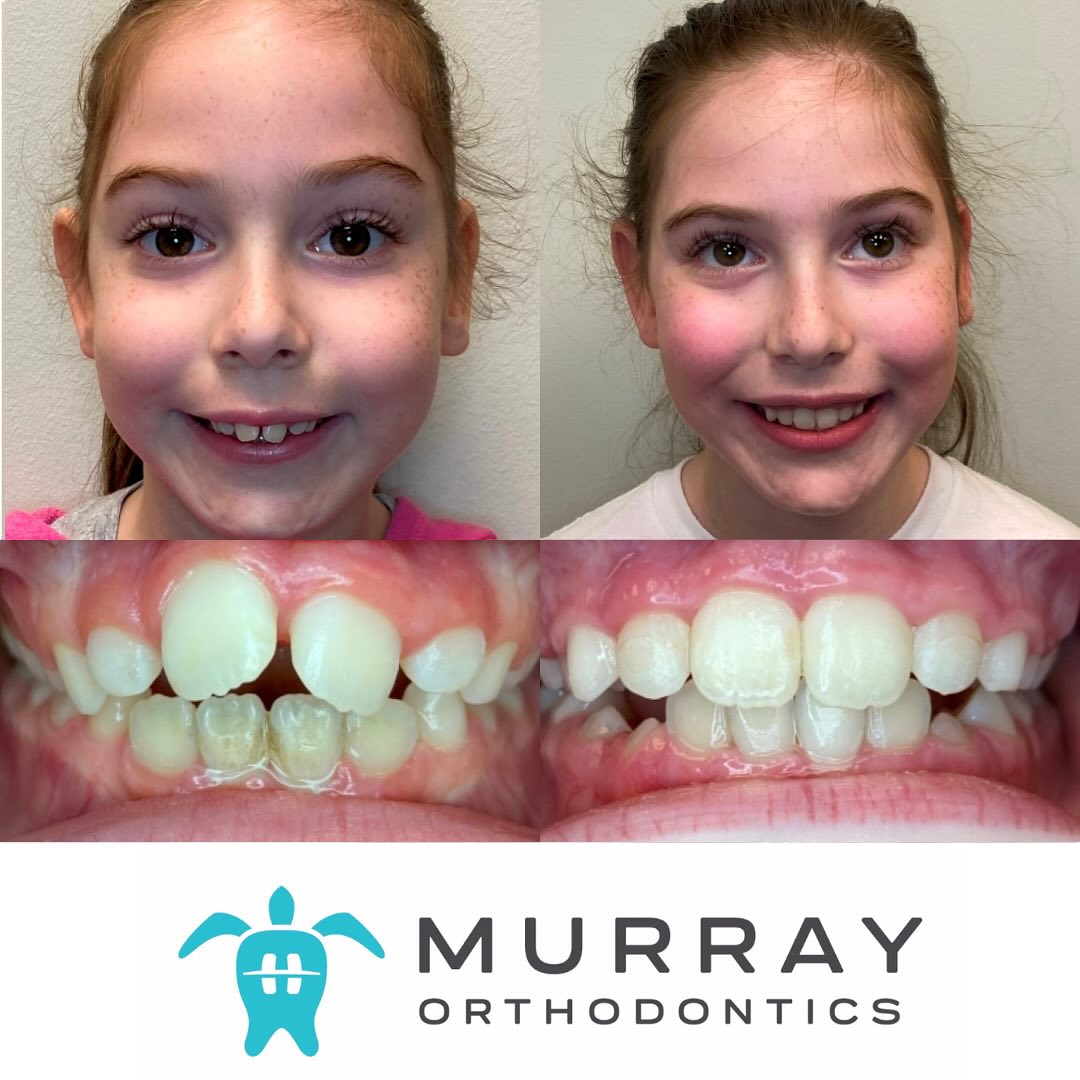
Why Palm Beach Gardens Families Trust Murray Orthodontics
Choosing any orthodontist is a big decision. Choosing one for something as important as airway health — especially for your child — requires even more confidence that you’ve found the right provider.
Here’s why families from Palm Beach Gardens, North Palm Beach, West Palm Beach, and across Palm Beach County trust Dr. Murray with their care:
Board-certified orthodontist with airway training. Dr. Murray isn’t just an orthodontist who read an article about sleep apnea. He has specific, advanced training in sleep disordered breathing — the kind of focused expertise that most orthodontic practices in Palm Beach County simply don’t offer.
270+ five-star Google reviews. Over 270 Palm Beach County families have shared their experiences, and the common thread is consistent: thorough explanations, honest pricing, and the kind of personal attention you don’t get at a corporate chain. Check out what they’re saying on our testimonials page or look us up on Google.
Voted Best Orthodontist in Palm Beach County in 2023 and 2024, and a Best of Palm Beach County 2025 Winner. Three years running — that kind of recognition comes from consistent results, not marketing.
You see the same orthodontist every visit. Dr. Murray personally handles your treatment from start to finish. When airway health is part of the equation, continuity matters. There’s no rotating cast of associates who may not be up to speed on your specific concerns.
Complete transparency from day one. Your free consultation includes a thorough evaluation, a clear explanation of findings, a recommended treatment plan, and a complete financial breakdown — before you commit to anything. No pressure, no surprises, no games with pricing.
A practice that’s been part of the community since 1991. Murray Orthodontics isn’t a pop-up practice or a corporate chain. We’ve been making Palm Beach County families smile for over 30 years with a team that includes staff members with 15 to 28+ years of experience.
Don’t just take our word for it — hear from our patients:
What Palm Beach County Families Are Saying
Dr. Murray and his staff are amazing. I walked in as a 50 year old looking for a consultation. Dr. Murray listened to the results I wanted to achieve and offered his knowledge and expertise. Dr Murray and his staff were always polite and friendly on every visit.
I just had my braces removed today and the results exceeded my expectations. My teeth are now perfect along with my smile. I highly recommend this office.
My 13 year old just got his braces put on by Dr Murray. He loves that he can change the color of his bands with every visit. And they give him tokens for when he takes care of his teeth. I know with confidence that he is in the best hands. And he does too.
Dr. Murray and his team installed the top portion of my braces today, with more to come in the next couple months. The atmosphere was clean, calm and welcoming.
The process was easy, they walked me through the procedure step by step and made sure to spend ample time showing me how to care for my teeth and braces with the hardware now installed.
Later this afternoon I received a check-in call from Dr. Murray to see how I was doing so far. I appreciate the time and attention from Dr. Murray and his team and so far I feel like I made a great choice partnering with them for my orthodontic needs.
Amazing staff and for first time in having orthodontic work I finally have the smile I wanted. I was starting to think it was impossible.
Dr. Murray is the best!! It’s like he took science, art, and dentistry and made magic happen. I’m so happy I chose to come here.
The Difference Between a Standard and Airway-Focused Orthodontist
| Standard Orthodontic Approach | Airway-Focused Approach | |
|---|---|---|
| Primary Goal | Straight teeth & proper bite | Straight teeth, proper bite and optimal airway function |
| Evaluation | Teeth alignment & bite relationship | Teeth, bite, jaw position, tongue space & airway assessment |
| Breathing Screening | Typically not included | Part of every evaluation Every Patient |
| Pediatric Screening | Not standard practice | Sleep questionnaire, tonsil check & cephalometric airway analysis Unique |
| Treatment Planning | Based on dental alignment | Considers dental alignment and airway impact |
| Treatment Goal | Symptom management (appliances worn at night) | Permanent structural correction — larger airway, day and night |
| Care Coordination | Primarily dental team | Sleep physicians, ENTs & other specialists as needed |
| Sleep Training | Standard orthodontic residency only | Advanced training in sleep disordered breathing & sleep apnea Board Certified |
| Schedule Free Consultation |
Dr. Murray’s training in sleep disordered breathing and sleep apnea — combined with his board certification from the American Board of Orthodontics — means you’re getting an orthodontist who evaluates the full picture, not just the teeth.
Serving Palm Beach Gardens, North Palm Beach, and West Palm Beach
Murray Orthodontics serves families throughout Palm Beach County from two convenient locations. Our Palm Beach Gardens office in The Oaks Center is easy to reach from North Palm Beach, Juno Beach, and Jupiter. Families from West Palm Beach, Greenacres, and Wellington are also just a short drive from either of our offices.
Whether you’re looking for an airway-focused orthodontist in North Palm Beach or need a sleep-conscious orthodontist near West Palm Beach, Murray Orthodontics offers the specialized training and personalized care that’s hard to find at larger corporate practices.
Frequently Asked Questions
What is airway orthodontics?
Airway orthodontics is an approach to treatment that evaluates how jaw position, arch width, and tongue space affect your ability to breathe — especially during sleep. It goes beyond cosmetic tooth alignment to address structural factors that can contribute to snoring, mouth breathing, and sleep apnea.
Can an orthodontist help with sleep apnea?
An airway-focused orthodontist can address the structural factors that contribute to sleep apnea, such as a narrow palate or a lower jaw that sits too far back. Many general dentists offer oral appliances that hold the jaw forward while you sleep — and those can be effective for symptom management. But as a specialist, Dr. Murray focuses on permanent structural correction: expanding the palate and advancing the jaw so the airway is naturally larger, day and night. Orthodontic treatment doesn’t replace a sleep physician’s care, but it complements it by addressing the root cause rather than just the symptom.
How do I know if my child has an airway problem?
Common signs include mouth breathing, snoring, restless sleep, bedwetting, difficulty concentrating at school, dark circles under the eyes, and a narrow or crowded arch. Many of these symptoms get attributed to other causes — allergies, ADHD, “just being a kid” — but when several show up together, an airway evaluation is worth pursuing. If your gut is telling you something is off, don’t dismiss it.
Is airway orthodontics different from regular orthodontics?
The treatment tools are often the same — metal braces, expanders, Invisalign in Palm Beach Gardens— but the evaluation and treatment planning consider how these tools can improve both dental alignment and airway function. Not every orthodontist has training in sleep disordered breathing, which is what makes this approach different. It’s not a separate specialty — it’s a deeper level of evaluation within orthodontics.
What’s the difference between a sleep dentist and an airway orthodontist?
A sleep dentist typically provides oral appliances — custom devices you wear at night to hold the jaw forward and keep the airway open. These manage the problem only while you’re wearing them. An airway-focused orthodontist like Dr. Murray aims to permanently change the jaw structure through orthodontic treatment, so the airway is naturally larger whether you’re wearing an appliance or not. Both have their place, but the goals are different.
At what age should my child be evaluated for airway issues?
The American Association of Orthodontists recommends an initial evaluation by age 7. For airway concerns specifically, early evaluation is critical because intervention during growth years can physically change the shape of the jaw and airway — preventing more complex (and more expensive) treatment later. The earlier we catch it, the more options we have.
Do you accept insurance for airway orthodontic treatment?
Yes. Murray Orthodontics accepts more Florida insurance plans than average, and we check your benefits before your first visit so you know exactly what’s covered. We also offer flexible, no-interest payment plans. Your free consultation includes a complete financial breakdown with no surprises.
What should I expect at my first visit?
Your first visit includes a thorough examination using our Medit digital scanner and cephalometric X-rays — no goopy impressions. For children, we also use a Pediatric Sleep Questionnaire to screen for sleep-related breathing issues and clinically evaluate the tonsils and adenoids. Dr. Murray will assess your teeth, bite, jaw position, and airway considerations. You’ll get a clear explanation of what he finds, a recommended treatment plan, and a complete cost breakdown. Same-day treatment starts are available if you’re ready to get going.
Schedule Your Free Consultation
You’ve done the research. You’ve connected the dots. Now let’s find out what’s going on and what we can do about it.
Your free consultation at Murray Orthodontics includes a complete evaluation, a clear explanation of what Dr. Murray finds, and an honest conversation about whether airway-focused treatment makes sense for you or your child. No pressure, no obligation — just answers.
Murray Orthodontics – Palm Beach Gardens
2517 Burns Rd, Palm Beach Gardens, FL 33410
561-775-7999
Murray Orthodontics – Royal Palm Beach
685 Royal Palm Beach Blvd #201, Royal Palm Beach, FL 33411
561-795-7707